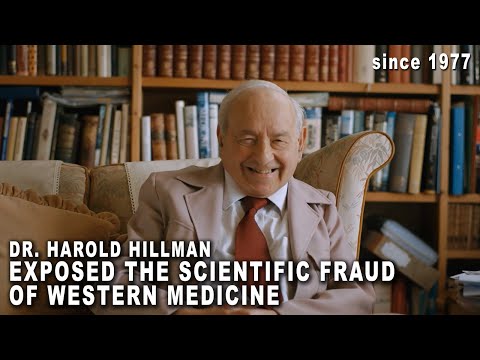
Harold Hillman spent 50 years in biology. At the end of a long career and toward the end of his life he gave a verdict on biology.
He concluded that the vast majority of Biology was pseudo-scientific.
During a research career lasting more than 50 years, I have concluded that the following procedures are unsuitable for studying the biology of living cells in intact animals and plants: subcellular fractionation; histology; histochemistry; electron microscopy; binding studies; use of ligands; immunocytochemistry; tissue slices; disruptive techniques; dehydration; deep freezing; freeze drying; boiling; use of extracellular markers; receptor studies; patch clamp measurements; inadequate calibrations. The main objections to these procedures are:
(i) they change the properties of the tissues being studied grossly and significantly;
(ii) they ignore the second law of thermodynamics;
(iii) they produce artefacts, many of which are two-dimensional;
(iv) adequate control procedures have never been published for them. I have described alternative procedures, and suggested that unsatisfactory ones should be abandoned.
I have put forward the hypothesis that the poor quality of cell biology in the 20th century and since is the reason for the failure of medical research to discover the chemical changes initiating
and his overall conclusions. Note the electron microscopy which is a central pillar in the fraud of the Virology. Every picture of a so-called virus is being attacked by Harold Hillmans points.
Overall conclusions
A. Most procedures used in research in cell biology have ignored the second law of thermodynamics (Atkins, 1994).
B. Control experiments for the effects of reagents and manoeuvres used on the results of experiments have been grossly inadequate.
C. Electron microscopists have ignored the dictates of solid geometry, and most of the apparent structures they have detected are artefacts of their preparation procedures (Hillman and Sartory, 1980). They select their illustrations, rather than show typical ones. They prefer the results from metal deposits over those from unfixed living cells.
D. Nuclei, containing nucleoli, and mitochondria are the only organelles present in cytoplasm (Hillman and Sartory, 1980).
E. Several structures seen in unfixed tissue by light microscopy have been ignored because they are not seen by electron microscopy (Table 4).
F. New high-resolution light microscopic techniques should be used to examine structures seen by electron microscopy (Table 7).